Government-Ready ArchitectureDPDP AlignedUPI/FASTag CompatibleAudit-Ready ReportingProcurement-Aware Deployment
Topographic background shadow lines graphic

Congestion Pricing People Can Accept

The cheapest new transport capacity in a congested city may already exist, the empty seats in vehicles already on the road. MTSAi helps cities unlock that capacity through rewards, fair pricing, and transparent public governance.

Share Your Ride. Pay Less. Earn Rewards. Support Your City.

Congested urban vehicle traffic drawing representation

Standards & Compliance

Built for Government Evaluation and Public Trust

Congestion pricing is already proven. What cities need is a more politically sustainable way to evaluate, govern, and communicate it. MTSAi is designed to support that process through procurement-aware architecture, privacy-conscious data handling, and government-controlled policy logic.

Government of India Digital Standards structural metric icon indicator
Designed, GIGW 3.0

Government of India Digital Standards

Structure, accessibility, and publishing standards expected of GoI platforms, enabling public information to be reviewed, navigated, and maintained effectively.

Information Security Practices structural metric icon indicator
Designed, ISO 27001 Alignment

Information Security Practices

Supports widely adopted security practices for access control, audit logging, and incident response, enabling evaluation against established frameworks.

Personal Data Protection structural metric icon indicator
Aligned, DPDP Act 2023

Personal Data Protection

Supports India’s personal data protection expectations through limited data collection, defined purpose, and built-in safeguards.

Sovereign Hosting Option structural metric icon indicator
Deployment Path, NIC / MeitY Cloud

Sovereign Hosting Option

Designed for deployment within government-approved infrastructure, supporting data residency and sovereign hosting requirements.

Audit & Accountability structural metric icon indicator
Evidence Ready, CAG Audit Trail

Audit & Accountability

Maintains structured records of policy rules, transactions, and incentive logic to support auditability and public accountability.

UPI & FASTag Compatibility structural metric icon indicator
Integration Path, NPCI Ecosystem

UPI & FASTag Compatibility

Supports integration with established national payment and tolling systems to align with existing commuter and agency workflows.

Audience Paths

Choose The Path Most Relevant To You

City Government context pathway illustration graphic artwork
GOVERNMENT

City Government

Understand how MTSAi supports a more politically sustainable congestion pricing model with full government control over rules, budgets, exemptions, and accountability.

Strategic Partner context pathway illustration graphic artwork
PARTNERS

Strategic Partner

Explore how MTSAi integrates into existing ecosystems without replacing current infrastructure or user platforms.

Policy Researcher context pathway illustration graphic artwork
REVIEWERS

Policy Researcher

Review the policy logic, system architecture, privacy model, and governance structure behind MTSAi.

Traffic on highway representation layout background

The Problem & The Opportunity

Why Congestion Pricing Often Stalls & What Can Improve It

Traditional congestion pricing can face resistance when road users experience it primarily as a charge without a visible public benefit.

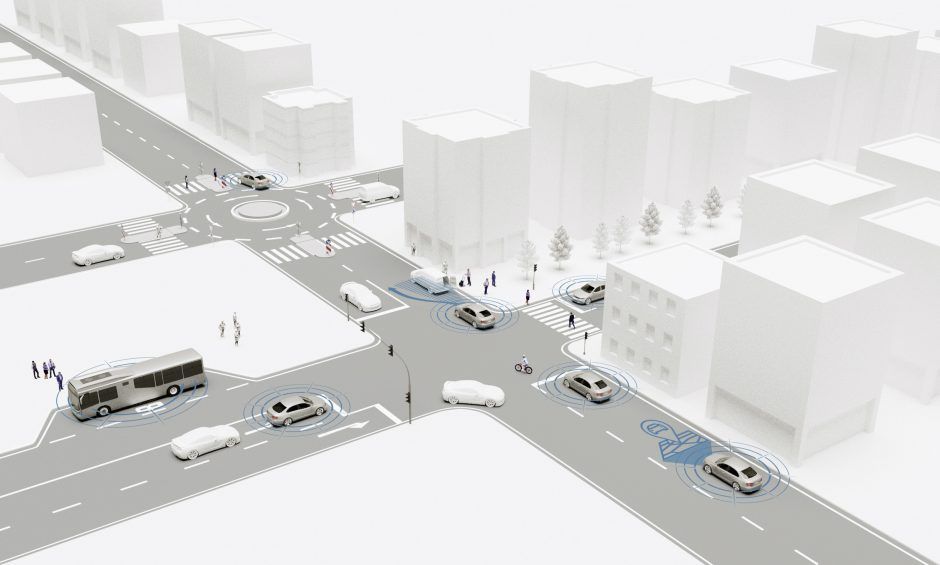
AI-powered smart city high tech traffic flow management representation

At the same time, many vehicles entering congested corridors remain underutilized:

Private cars often carry only the driver

Taxis and ride-hailing vehicles often carry one passenger

Two-wheelers typically carry one rider

This means cities may already possess transport capacity that is not fully used.

A car carrying three people is not three cars.

The most cost-effective congestion relief is not always new infrastructure. It can also come from making better use of road space already in operation.

MTSAi is designed around that principle.

The MTSAi Difference

Reward-Based Congestion Pricing

MTSAi uses a Reward-Based Congestion Pricing model, combining road-use pricing with meaningful incentives for behaviour that helps reduce congestion.

  • Reduce peak-hour congestion
  • Improve travel-time reliability
  • Generate recurring transport revenue
  • Reward cooperative commuter behaviour
  • Protect lower-income and vulnerable users
  • Build stronger public acceptance
  • Improve long-term policy sustainability
  • Sharing rides
  • Filling unused seats
  • Travelling outside peak periods
  • Using public transport
  • Choosing lower-pressure routes where appropriate
MTSAi Reward-Based Congestion Pricing Audience Dashboard and Framework

The outcome: move more people in fewer vehicles.

MTSAi is designed to help governments evaluate substantial recurring revenue opportunities from congestion management while building public acceptance through incentives, rewards, recognition, and transparent citizen participation.

In larger cities and high-volume corridors, properly designed congestion-management programmes may create revenue opportunities measured in millions, while also improving traffic efficiency and funding public mobility priorities. MTSAi is designed to help governments evaluate those opportunities without making the public feel that congestion pricing is only another penalty.

How Cities Encourage Participation

Practical Incentives People Understand

Public participation improves when incentives are clear, visible, and relevant.

Cities may choose to offer:

  • Lower charges for shared rides
  • Credits for off-peak travel
  • Reduced travel cost through ride-sharing participation
  • Public recognition for high contributors
  • Mobility achievement levels or civic awards
  • Prize-based programmes, where permitted by law

When incentives are meaningful:

  • Drivers can improve earnings
  • Passengers can reduce costs
  • Empty seats become valuable
  • Fewer vehicles enter congested zones
  • Shared travel becomes more attractive

MTSAi is also designed to support a city-branded commuter app as the primary way citizens participate in the programme.

Commuters are designed to be able to:

Register once for the city’s programme

Participate in city-approved reward structures

Track their earnings and trip history

Engage with the programme on their own terms

The commuter participates visibly and earns rewards. The city gets a congestion management tool with built-in public engagement. The government remains in control throughout.

Public Trust Through Transparency

A Programme Citizens Can See

Long-term success depends on visible public trust.
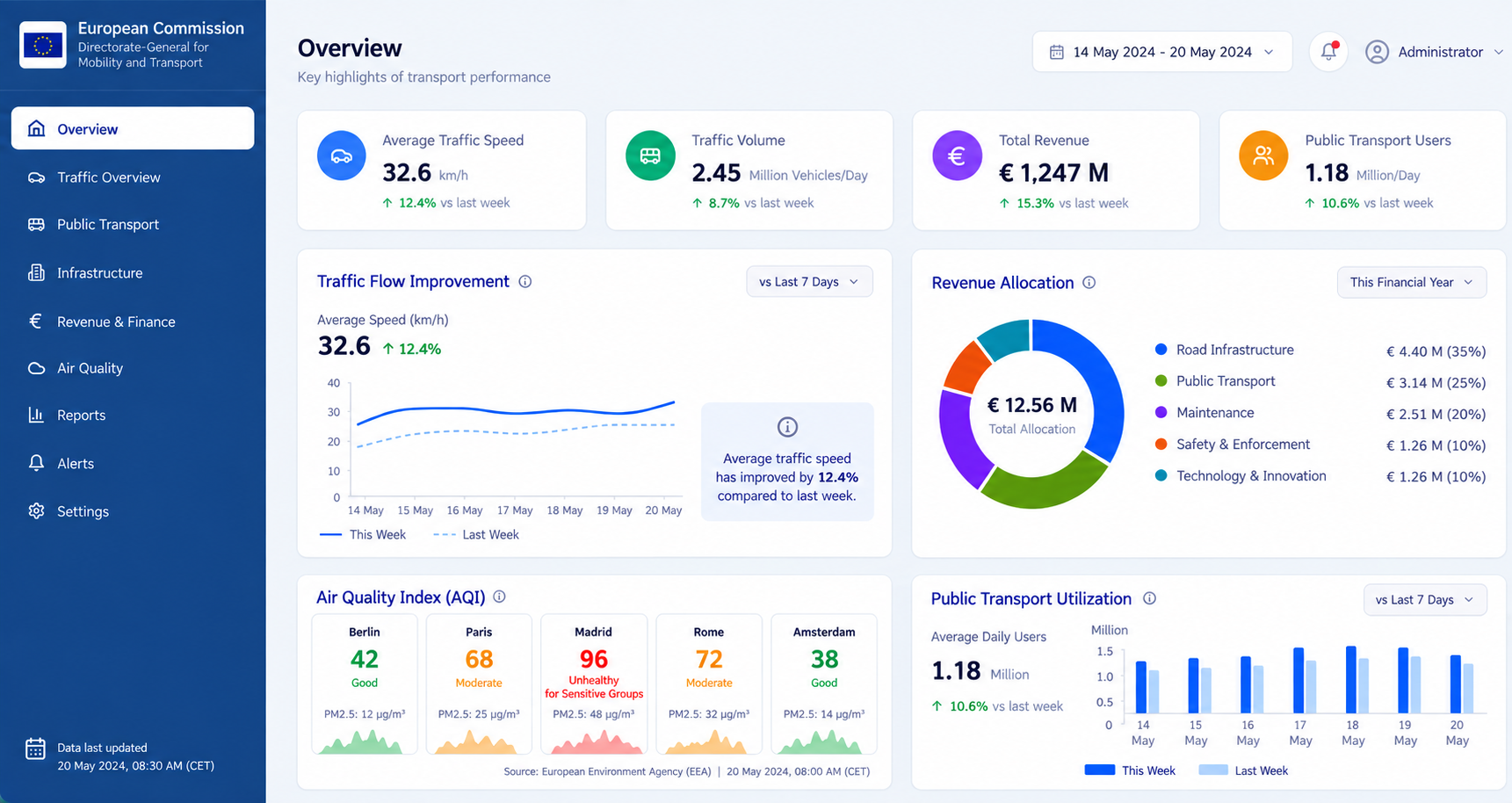
  • Where revenue is allocated
  • How commuters benefit
  • Whether congestion is improving
  • Whether the system is operating fairly
  • Revenue allocation toward transport priorities
  • Travel-time and reliability indicators
  • Participation trends and incentive distribution
  • Estimated congestion-reduction impacts
  • Environmental and air-quality indicators, where available
  • City-approved
  • Methodologically reviewable
  • Suitable for public communication
  • Aligned with government disclosure practices

This helps convert pricing policy into a visible public-benefit programme rather than a perceived charge.

MTSAi Reporting Interface Overview

Continuous Operation and Localization

A System That Stays Current

MTSAi is designed as an operating platform, not a one-time installation.

The system can be:

Maintained continuously

Updated as traffic patterns evolve

Localized for each city

Adjusted to policy priorities

Integrated with evolving mobility and payment systems

This helps ensure the programme remains:

Relevant

Accurate

Operationally effective

Sustainable over time

Government Control

Policy Control Stays with the City

For congestion pricing to remain publicly acceptable, government must remain visibly in control.

City authorities retain decision-making over:

Pricing rules

Incentive structures

Exemptions and equity protections

Enforcement thresholds

Budget allocation

Programme expansion or revision

MTSAi is designed to:

Implement approved policy logic

Support administrative oversight

Maintain auditability

Enable structured operations

The city governs the programme. MTSAi supports delivery.

City municipal road traffic congestion managed by automated framework network parameters

Privacy by Design

Public trust requires disciplined data handling.

Not Collected

Continuous GPS tracking

Biometric data

Cross-city identity linkage

Collected in Limited Form

Eligibility signals

Incentive and settlement records

Aggregated programme metrics

Institutional Control

City authority acts as data controller

MTSAi acts as processor where contracted

Retention periods defined by policy and contract

Privacy is part of programme legitimacy, not an afterthought.

ABOUT MTSAi

Government-Focused Congestion Management Infrastructure

MTSAi (Miracle Traffic Solutions AI) is a platform designed to help cities make congestion pricing more acceptable, effective, and sustainable.

India is the primary launch market.

Operational Framework:

Cities engage MTSAi through standard procurement processes.

Government retains policy control.

The city retains ownership of its authorised data.

Technical foundation includes:

Collaboration with Budapest University of Technology and Economics

Work related to vehicle occupancy estimation

Strategic integration pathways with recognised transport-technology partners

Open API architecture for future flexibility

City traffic aerial highway overview framework infrastructure

Ready to Evaluate Congestion Pricing People Can Accept?

MTSAi offers a structured pathway for governments and strategic partners to review:

Policy design options

Incentives and public acceptance logic

Revenue and governance frameworks

Integration pathways

Privacy and compliance posture

Pilot-readiness requirements